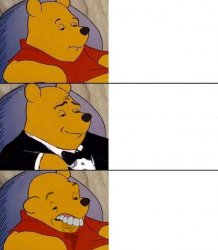
MEME REFERENCE
Best,Better, Blurst
Use Best,Better, Blurst when a before-and-after comparison exposes a striking change in quality or mood.
- What it expresses
- Transformation through comparison: the central figure’s transformation through comparison posture in Best,Better, Blurst represents a moment where a before-and-after comparison exposes a striking change in quality or mood.
- Example
- For example, the prototype begins polished and ends as an unusable patchwork; the visual analogy is the central figure’s transformation through comparison posture in Best,Better, Blurst, signaling that a before-and-after comparison exposes a striking change in quality or mood.
- When not to use it
- Avoid when nothing meaningfully changes between the versions; the central figure’s transformation through comparison posture in Best,Better, Blurst would incorrectly signal that a before-and-after comparison exposes a striking change in quality or mood.